
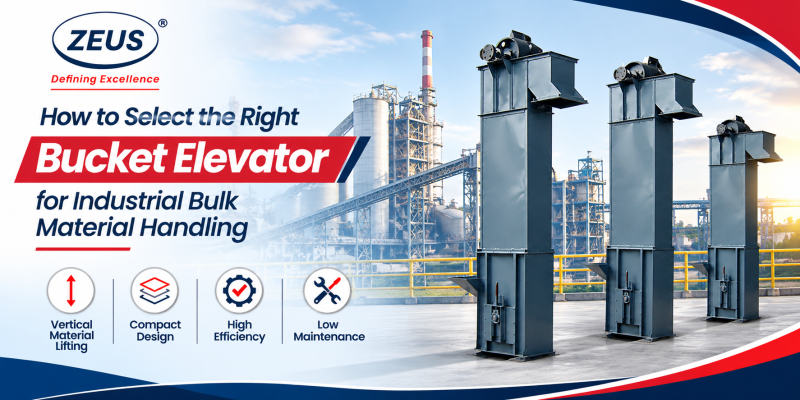
Industrial plants often need to transport bulk materials vertically between different processing, storage and production levels. When floor space is limited, selecting the right vertical material handling equipment becomes especially important. A Bucket Elevator provides a practical solution for lifting bulk materials efficiently while using relatively compact installation space.
However, choosing the right equipment requires more than comparing capacity and dimensions. Material characteristics, conveying requirements, installation conditions and operating needs all influence the selection process.
In this guide, we explain how to select the right bucket elevator for industrial applications, compare belt and chain type configurations, and discuss the important factors buyers should consider before choosing a system.
What Is a Bucket Elevator?
A bucket elevator is a mechanical material handling system designed to lift bulk materials vertically. It uses a series of buckets attached to a moving belt or chain to carry material from a lower feeding point to an upper discharge point.
As the system operates, the buckets collect material at the loading section, move vertically through the elevator casing and discharge the material at the designated outlet.
A Bucket Elevator is particularly useful in industrial plants where materials need to move between different floor levels without occupying excessive horizontal space.
Industries use bucket elevators to handle materials such as coal, minerals, cement-related materials, biomass and other bulk products, depending on the equipment configuration.
Types of Bucket Elevators: Belt Type vs Chain Type
One of the first decisions when selecting a bucket elevator is choosing between a belt type and a chain type configuration.
Both systems use buckets for vertical material transportation. However, their construction and suitability depend on the material properties and application requirements.
1. Belt Type Bucket Elevator
A belt type bucket elevator uses a continuous belt to carry buckets vertically. The buckets attach to the belt and move material from the feeding point to the discharge location.
This configuration can be considered for suitable bulk material handling applications where the operating conditions match the belt design.
Before selecting a belt type elevator, evaluate the material characteristics, required capacity and operating environment.
2. Chain Type Bucket Elevator
A chain type bucket elevator uses chains to support and move the buckets through the conveying system.
This configuration can be considered for industrial applications where the equipment design and chain arrangement suit the material and operating requirements.
The selection should account for material properties, loading conditions, capacity and installation requirements.
Belt Type vs Chain Type Bucket Elevator
| Comparison Factor | Belt Type Bucket Elevator | Chain Type Bucket Elevator |
|---|---|---|
| Main Component | Moving belt | Moving chain |
| Bucket Support | Buckets attached to the belt | Buckets attached to the chain arrangement |
| Selection Consideration | Material properties and belt operating conditions | Material properties and chain operating conditions |
| Application | Suitable bulk material handling applications | Suitable industrial bulk material handling applications |
| Selection Priority | Belt configuration and operating requirements | Chain configuration and operating requirements |
The right configuration depends on the application rather than simply choosing one type over another. Therefore, discuss the material and operating conditions with the equipment manufacturer before finalizing the design.
7 Important Factors to Consider When Selecting a Bucket Elevator
Selecting the right bucket elevator can influence material flow, plant layout and long-term equipment operation. Consider the following factors before purchasing or installing a system.
1. Understand the Material Characteristics
Start by identifying the material that the elevator needs to handle. Different bulk materials have different physical properties, and these properties can influence equipment selection.
Consider factors such as:
- Material type
- Particle size
- Bulk density
- Moisture content
- Flow characteristics
- Abrasive properties
For example, coal, minerals, biomass and solid waste may require different equipment configurations. Understanding these characteristics helps the manufacturer evaluate a suitable design.
2. Determine the Required Handling Capacity
Capacity is one of the most important factors in bucket elevator selection.
The equipment should handle the required quantity of material without creating unnecessary restrictions in the production process.
Before selecting a system, identify:
- Required material handling capacity
- Expected operating hours
- Material feeding rate
- Production requirements
- Future capacity requirements, where applicable
An undersized elevator may restrict material flow, while an unsuitable oversized configuration may increase project costs.
Therefore, share accurate capacity requirements with the manufacturer during the initial discussion.
3. Consider the Required Lifting Height
The vertical distance between the material feeding point and discharge point directly affects the elevator arrangement.
Before finalizing the equipment, evaluate the available installation height, feeding level, discharge location and plant structure.
Moreover, the elevator should integrate properly with connected equipment and the overall material handling layout.
Providing accurate site dimensions helps engineers evaluate the installation requirements.
4. Evaluate Available Installation Space
Industrial plants often have limited space for additional equipment. This makes the overall dimensions and arrangement of a bucket elevator important selection considerations.
A compact design can help use available installation space more effectively.
Check the available space around the proposed installation, including access for inspection, maintenance and connection with other equipment.
In addition, consider the existing plant layout before deciding on the elevator configuration.
5. Choose the Suitable Belt or Chain Configuration
As discussed earlier, bucket elevators are available in belt and chain type configurations.
The choice depends on material characteristics, operating requirements and equipment design.
For this reason, avoid selecting a configuration based only on general assumptions. Instead, provide the manufacturer with details about the material, required capacity and working conditions.
This allows the technical team to evaluate a suitable configuration for the application.
6. Check Maintenance and Component Accessibility
Maintenance requirements also influence the long-term performance of industrial equipment.
A suitable bucket elevator should allow maintenance teams to inspect important components and carry out servicing according to the manufacturer’s recommendations.
Consider the following points:
- Accessibility of maintenance areas
- Inspection requirements
- Interchangeability of parts
- Component replacement requirements
- Availability of maintenance support
A design that considers maintenance access can make routine inspection and servicing more manageable.
7. Select an Application-Specific Design
Every industrial plant has different material handling requirements. Therefore, a standard configuration may not suit every installation.
The manufacturer should consider material properties, site conditions and process requirements while developing the equipment.
An application-specific design helps align the bucket elevator with the actual working environment and material handling process.
Industrial Applications of Bucket Elevators
Bucket elevators support vertical bulk material transportation across several industrial sectors.
Their compact arrangement makes them useful where plants need to transfer materials between different processing or storage levels.
Some common application areas include:
Coal handling operations require equipment to transfer bulk material between different plant sections. Bucket elevators can be considered for suitable vertical conveying requirements.
- Cement Industries
Cement plants handle different bulk materials throughout their production processes. Bucket elevators can support vertical material transportation where the application and equipment configuration are suitable.
- Minerals Industry
Mineral processing facilities may require vertical movement of bulk materials between equipment and storage areas.
- Brick, Clay and Ceramics Industries
These industries handle different raw materials during manufacturing. Bucket elevators can support suitable vertical material transfer applications.
- Food Industries
Food processing facilities may use bucket elevators for vertical movement of suitable bulk materials, depending on material handling and process requirements.
- Paper Industries
Paper manufacturing operations involve the movement of different materials. Bucket elevators can be considered where vertical conveying is required.
Biomass processing facilities handle bulk materials that may require movement between feeding, processing and storage sections.
Solid waste processing plants may use vertical material handling equipment as part of their overall processing arrangement.
- Other Industrial Applications
Bucket elevators can also be considered for tire and rubber industries and other industrial applications where the material characteristics and operating requirements match the equipment design.
Key Features of Zeus Engitech Bucket Elevators
Zeus Engitech manufactures belt type and chain type bucket elevators for different bulk material handling applications.
According to its published product information, the equipment includes the following features:
- Compact Design: Suitable for applications where installation space is limited.
- Interchangeability of Parts: Designed with interchangeable components.
- Application-Based Manufacturing: Designed and manufactured according to site conditions and material properties.
- Dust-Free Operation: Designed to support dust-free material handling.
- High Efficiency: Developed for efficient material transportation.
- Low Maintenance: Designed with maintenance requirements in mind.
- Higher Material Handling Rate: Supports industrial bulk material movement.
Technical Specifications
| Specification | Zeus Engitech Bucket Elevator |
|---|---|
| Available Types | Belt Type and Chain Type |
| Sizes | 6″ × 4″ to 24″ × 8″ |
| Capacity | Up to 150 TPH |
| Design | Compact Design |
| Manufacturing | Based on Site Conditions and Material Properties |
Note: Actual equipment selection and configuration depend on the application and operating requirements. Contact the manufacturer to discuss the suitable specifications for your project.
Why Choose an Application-Based Bucket Elevator Manufacturer?
Choosing the right manufacturer is an important part of planning a material handling project.
An experienced manufacturer can evaluate the material characteristics, capacity requirements and installation conditions before recommending an equipment configuration.
When evaluating a bucket elevator manufacturer, consider:
- Experience in industrial material handling equipment
- Availability of belt and chain type configurations
- Ability to consider site-specific requirements
- Equipment specifications and manufacturing details
- Maintenance and component accessibility
- Technical support during project planning
These considerations can help buyers make informed decisions and select equipment that matches their plant requirements.
Bucket Elevator Selection Checklist for Industrial Buyers
Before requesting a quotation, prepare the following information:
| Requirement | Details to Prepare |
|---|---|
| Material Type | Coal, minerals, biomass, food material or other bulk material |
| Required Capacity | Material handling requirement in TPH |
| Lifting Height | Vertical conveying distance |
| Material Properties | Particle size, bulk density, moisture and flow characteristics |
| Elevator Type | Belt type or chain type, subject to technical evaluation |
| Installation Location | Available plant space and site conditions |
| Application | Cement, power, minerals, food or other industry |
Sharing these details helps the manufacturer understand your application and evaluate a suitable bucket elevator configuration.
Need a Bucket Elevator for Your Industrial Application?
Looking for a suitable bucket elevator for your plant? Contact Zeus Engitech Private Limited to discuss your bulk material handling requirements, capacity needs and application-specific equipment options.
Zeus Engitech manufactures both belt type and chain type bucket elevators, with sizes ranging from 6″ × 4″ to 24″ × 8″ and handling capacity up to 150 TPH, depending on the selected configuration and application.
- Sales: +91 96870 31234
- Email: info@zeusengitech.com
- Product Page: Bucket Elevator by Zeus Engitech
- Project Enquiry: Request a Quote
Discuss your material type, required capacity and site conditions with the Zeus Engitech team to explore a suitable bucket elevator solution for your industrial application.
Conclusion
Selecting the right bucket elevator requires careful evaluation of material properties, handling capacity, lifting height, installation space and operating conditions.
Both belt type and chain type bucket elevators can support industrial bulk material handling applications when their configurations match the process requirements.
By considering these selection factors and sharing accurate project details with the manufacturer, industrial buyers can make more informed equipment decisions.
For application-specific bucket elevator requirements, connect with Zeus Engitech and discuss your project with its team.
Frequently Asked Questions
1. What is a bucket elevator used for?
A bucket elevator is used to transport bulk materials vertically from one level to another. Industries use it for applications involving materials such as coal, minerals, biomass and other suitable bulk products.
2. What are the main types of bucket elevators?
The two configurations offered by Zeus Engitech are belt type bucket elevators and chain type bucket elevators. The suitable type depends on material characteristics and operating requirements.
3. How do I select the right bucket elevator capacity?
First, identify the quantity of material your plant needs to handle per hour. Then consider material properties, feeding conditions and process requirements before finalizing the equipment capacity.
4. What is the capacity of Zeus Engitech bucket elevators?
Zeus Engitech offers bucket elevators with a handling capacity of up to 150 TPH. The actual capacity depends on the equipment configuration and application.
5. Which industries use bucket elevators?
Bucket elevators are used in coal and power plants, cement industries, minerals, brick and clay industries, ceramics, food, paper, biomass, solid waste handling, tire and rubber industries and other industrial applications.
6. What factors affect bucket elevator selection?
Important factors include material type, particle size, bulk density, moisture content, required capacity, lifting height, installation space and operating conditions.
7. Why is a compact bucket elevator design important?
A compact design can help industrial plants use available installation space more effectively, especially when vertical material transportation is required within a limited plant layout.
8. Where can I find a bucket elevator manufacturer in India?
You can explore the bucket elevator solutions offered by Zeus Engitech and contact the team to discuss your industrial material handling requirements and project specifications.